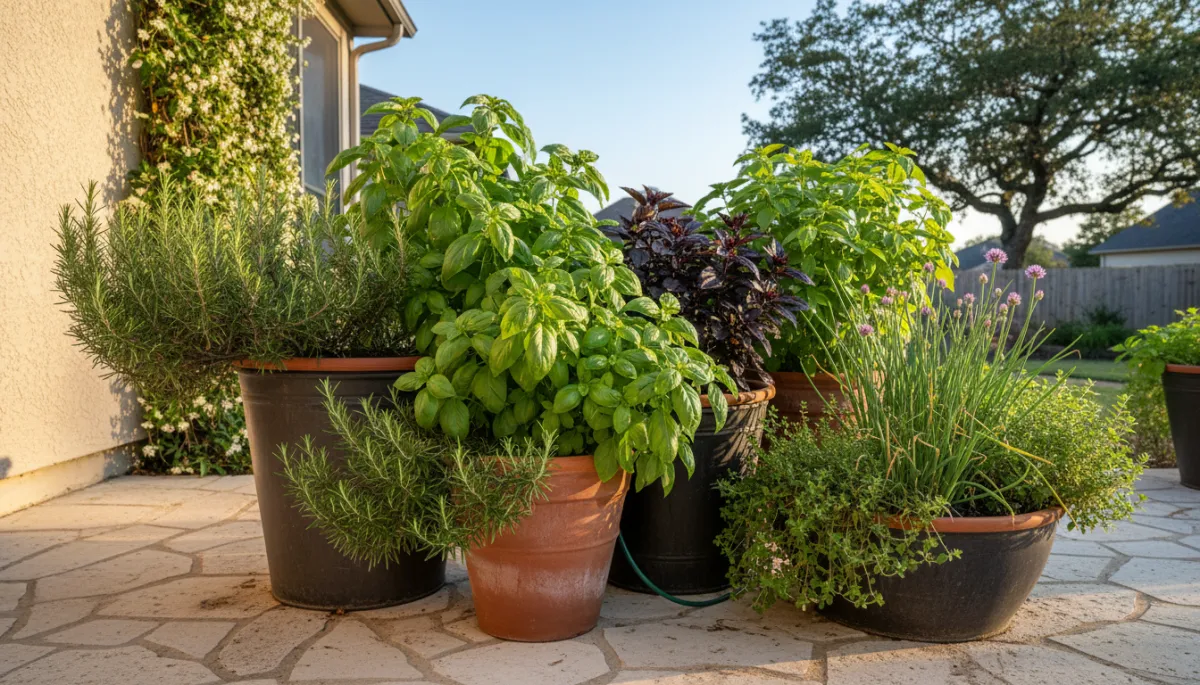
Best Herbs for North Texas Patio Heat
Gardening, Patio Herb Gardening, North Texas
The Best Herbs to Grow on a North Texas Patio — What Actually Survives the Heat
Growing herbs on a North Texas patio sounds simple — and it can be, if you choose the right plants and set them up for our weather, not a catalog photo. Collin and Grayson County summers are a different animal: weeks above 100°F, hot nights that never cool down, and afternoon sun that bakes containers dry by 3 p.m. A lot of “easy” herbs melt, bolt, or rot in that mix. Below, I’ll walk you through the best herbs to grow on a North Texas patio, season by season, so your containers actually produce something worth cooking with all year long.
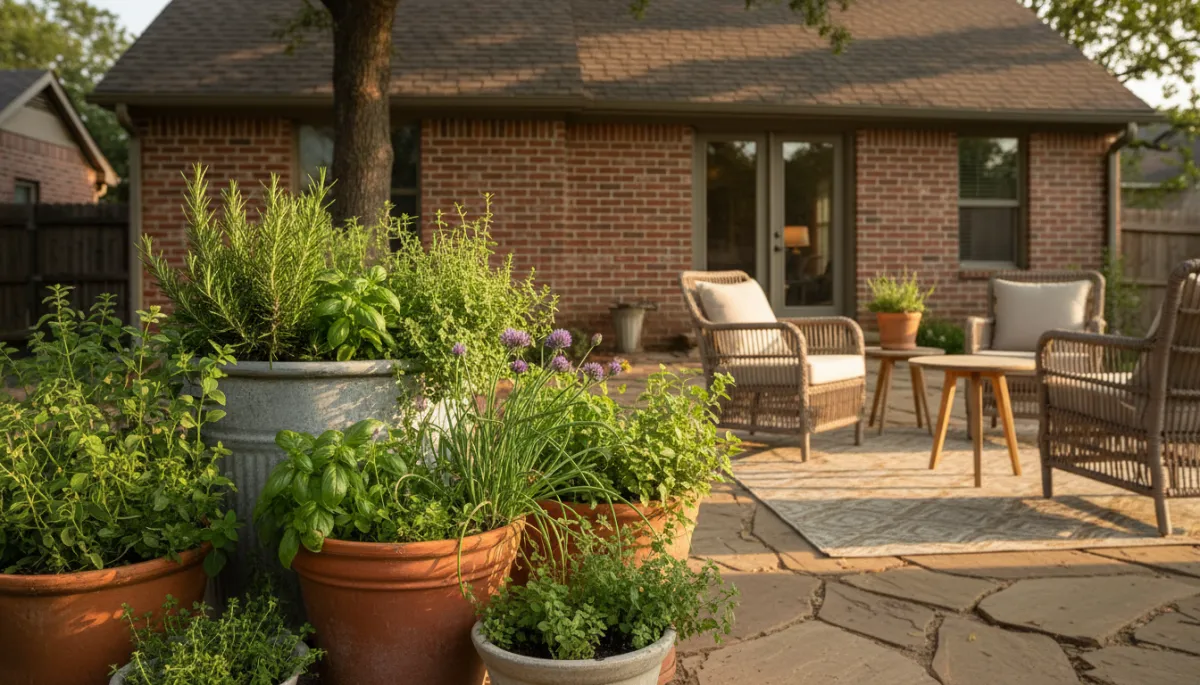
Heat-Loving Herbs — Your Summer Backbone
When people ask me about the best herbs to grow on a North Texas patio, I start with what survives July in McKinney, Frisco, and Sherman without daily drama. These are the herbs for Texas heat that actually hold up on a west-facing balcony, a concrete apartment patio, or a sunny back porch in Collin County. If you build your summer plan around these, you’ll still be harvesting when the thermometer is stuck at 103°F.
Rosemary: The Near-Permanent Workhorse
Rosemary is the most reliable perennial herb for a patio herb garden in North Texas. I’ve seen it sail through Collin County summers that cooked petunias in a day. Give it a large container, full sun, and excellent drainage. That means a quality potting mix, not native Blackland clay and not “topsoil” from the big box store. Water deeply, then let the top few inches dry before watering again. In a 16–20 inch pot, rosemary will grow into a small shrub over a few seasons and become a near-permanent fixture on your patio.
Basil: Summer’s High-Maintenance Producer
Basil loves our heat, but it does not love neglect. In Allen, Prosper, and Celina, you can expect strong growth from May through September if you keep it watered and picked. Use at least an 18-inch container for each basil plant or pair of plants. Basil in a small pot on hot concrete will dry out before you’re home from work. Water consistently and never let it wilt hard; stress plus heat equals bolting. Pinch off every flower as soon as you see it. I like to plant both Genovese (for pesto and everyday cooking) and Thai basil (for stir-fries and a stronger, spicier flavor) in the same patio herb garden. Both do well in full sun with regular water.
Thyme: Small Plant, Big Payoff
Thyme is a true Mediterranean herb that actually appreciates our dry, blazing afternoons. In Fairview and Princeton, I’ve seen English and lemon thyme keep chugging along when more delicate herbs are fried. It’s a slow grower, so don’t expect instant volume, but it’s long-lived. Thyme pairs well with rosemary in the same container because they want the same thing: full sun and sharp drainage. The one way to kill thyme in a North Texas patio container is to keep the soil soggy. Make sure your pot has a drainage hole and never let it sit in a saucer of standing water.
Oregano: Almost Indestructible in Heat
Oregano is another “plant it and mostly forget it” option for a patio herb garden in Collin County. Greek oregano has the strongest flavor and handles full sun on a stone patio in Frisco without complaint. In a well-drained pot, it spreads into a low mound you can harvest from all summer. Cut it back hard a couple of times per season and it will regrow thicker. Overwatering is more of a risk than underwatering; it’s built to handle dry spells better than wet feet.
Chives: Reliable Perennial Edging
Chives are one of my favorite “set it and forget it” herbs that survive Texas summer with only minor sulking. In Denison and Sherman, they’ll come back every year in a container if you don’t cook the roots by using a tiny black pot. Plant them in at least a 12-inch container, or tuck them along the edge of a larger pot with rosemary or oregano. They may thin out in late July and August, but as soon as temperatures drop, they rebound and give you fresh green onion flavor well into winter.
Cool-Season Herbs — Fall and Winter Are Your Best Window
A productive patio herb garden North Texas homeowners love doesn’t rely on summer alone. Our secret weapon is the long, mild fall and winter. From about late September through March, Collin and Grayson County patios are perfect for cool-season herbs that hate July but thrive in 40–70°F weather. Plan your containers so you swap in these herbs as the heat breaks.
Cilantro: Grow It When It Wants to Grow
Cilantro is one of the most misunderstood herbs in North Texas. On a July patio in McKinney, it will bolt in days — not weeks — and you’ll be left with bitter stems. Don’t bother in summer. Instead, direct sow seeds in September and October into a wide, shallow container. You’ll get lush, leafy growth through fall and into winter, especially in years when we don’t have long hard freezes. Sow again in February for a spring flush. If you let a few plants flower and go to seed, they’ll drop coriander seeds and often give you a volunteer patch next cool season.
Parsley: Slow Start, Strong Finish
Parsley is a cool-season biennial that acts almost like a winter perennial in our area. In Collin County, I like to transplant parsley into patio containers in late September. It’s slow to establish, so don’t judge it in the first few weeks. Once the roots are settled, flat-leaf and curly parsley both handle our light freezes and keep producing through December and January with maybe a bit of frost cloth on the coldest nights. By the time it wants to bolt in late spring, your summer herbs are ready to take over.
Dill: Fall First, Spring If You Can Time It
Dill looks soft and delicate, but it’s tough in the right season. Direct sow dill in September into a deep container; it doesn’t like having its roots disturbed. You’ll get plenty of feathery foliage for cooking through fall. In spring, you can try another sowing, but once we start hitting warm days in April and May, dill bolts quickly. Let a few plants flower and set seed — you can save seed for the next fall or let them self-sow in the same pot.
Mint: Contained but Reliable
Mint is technically perennial and very cold-hardy here, but it needs its own container. In Blackland Prairie soil it would take over; in a pot on your patio in Allen or Prosper, it just fills the space. Spearmint and peppermint both do well in our climate, especially in fall and spring when temperatures are moderate. In the peak of summer, mint can look tired, but if the container is large enough and not baking on bare concrete, it will push through and then explode with new growth once cooler weather returns. Expect it to go mostly dormant in deep winter and then pop back up in early spring.
What Not to Bother With in Summer
A big part of choosing the best herbs to grow on a North Texas patio is knowing what to skip, especially from May through September. Some herbs are simply not worth the water, frustration, or patio real estate when you’re dealing with 100°F afternoons and hot, humid nights.
- Cilantro in summer: It bolts within days in Texas heat, even in partial shade. Save it for fall and winter, or you’ll just be feeding the compost bin.
- Lavender: It hates our humidity and our Blackland Prairie drainage. In a raised container with a very gritty mix and careful watering, experienced gardeners can keep it alive, but it is absolutely not a beginner herb for a patio herb garden North Texas style. There are easier wins.
- Tarragon: French tarragon is fussy in our heat and often sulks or dies back. Russian tarragon will grow, but the flavor is weak. For most patios in Collin and Grayson County, it’s just not worth the container space.
Container Tips for a North Texas Patio Herb Garden
Even the toughest herbs that survive Texas summer will fail if the container setup is wrong. Our combination of sun, heat, and heavy native clay means you have to treat a patio herb garden in Collin County or Grayson County differently than one in a milder climate. Follow these four rules and you’ll stack the odds in your favor.
- Container size: bigger is better. Small pots heat up and dry out fast on a balcony in Frisco or a driveway in Sherman. Aim for a minimum 12-inch diameter per herb, and 18 inches for thirsty summer growers like basil and mint. Larger soil volumes stay cooler and hold moisture longer, which matters when it’s 105°F and windy.
- Soil mix: skip native soil completely. Do not scoop garden soil or Blackland clay into your pots. It compacts, holds too much water in some spots, and dries to brick in others. Use a high-quality potting mix with good drainage. The Grower’s Life patio kits use a custom blend built specifically for container growing in North Texas conditions, so roots get both air and moisture without sitting in muck.
- Watering in summer: check daily. In July and August, containers can go from “fine” to bone-dry in a single afternoon. Rosemary, thyme, and oregano forgive the occasional miss, but basil will punish you by wilting and bolting. Get in the habit of checking soil with your finger every day, or better yet, install a simple drip emitter on a timer. That’s what we build into TGL’s patio herb garden systems to remove daily guesswork.
- Sun placement: manage afternoon scorch. Most herbs for Texas heat want full sun, but “full sun” in North Texas is different than in Oregon. East-facing patios or spots that get shade after 2 p.m. are ideal. On a west-facing balcony in Allen, even tough herbs appreciate a bit of afternoon relief. You’ll still get strong production without the constant stress and leaf burn.
If you want a patio herb garden designed, built, and planted specifically for North Texas conditions — with the right soil blend, container sizes, and drip irrigation already dialed in — that’s exactly what The Grower’s Life patio garden kits deliver. You can learn more and get started at thegrowerslife.com/urban-patio-box. For detailed timing on when to plant each herb in Collin and Grayson County, check out our North Texas Planting Calendar post and plan your patio rotations season by season.
