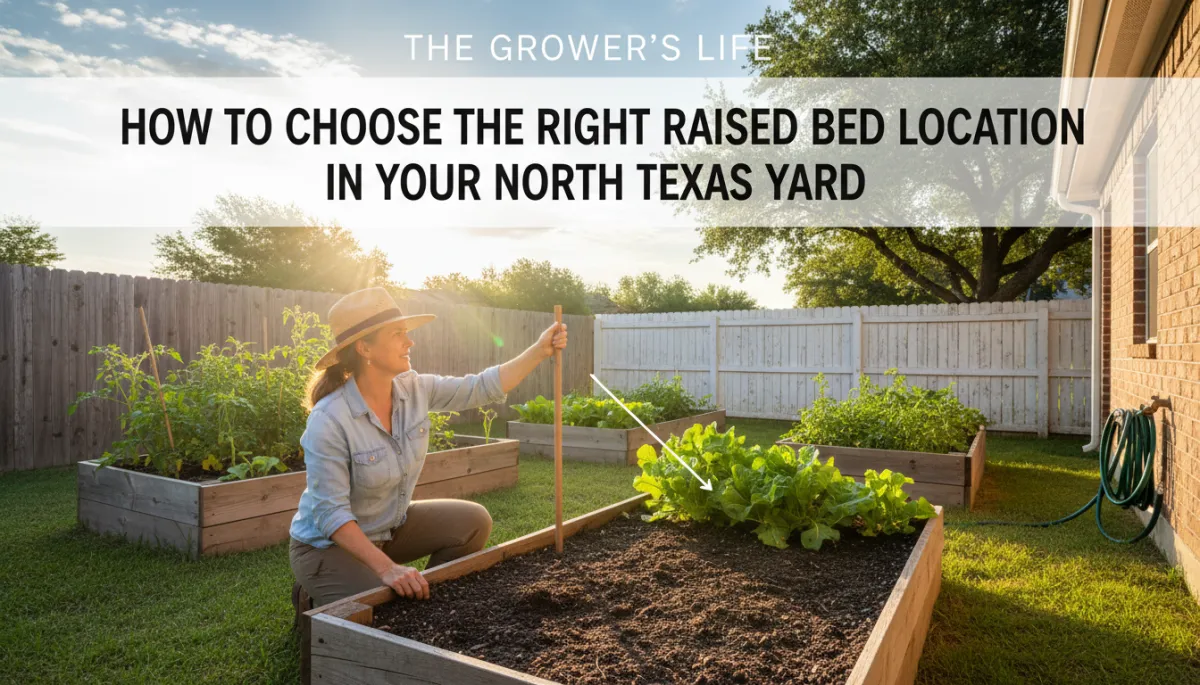
Choose the Best Raised Bed Location in North Texas
Gardening, Raised Beds, North Texas
How to Choose the Right Raised Bed Location in Your North Texas Yard
Where you put your raised bed determines what you can grow and how well it performs. A beautifully built cedar bed in the wrong corner of your yard will still struggle. A well-placed bed in the right microclimate will crank out food season after season with far less frustration. North Texas yards have their own rules: brutal summer heat, a harsh afternoon sun angle, Blackland Prairie clay under your lawn, and HOA setback requirements in many Collin County neighborhoods. This guide walks through the five factors Piper Klee-Waddle assesses on every site visit before recommending a raised bed location in McKinney, Frisco, Allen, Prosper, Celina, Princeton, Fairview, Sherman, or Denison.
Factor 1 — Sun Exposure (The Non-Negotiable)
If you remember nothing else about how to choose raised bed garden location in North Texas, remember this: sun is non-negotiable. Most food-producing vegetables need 6–8 hours of direct sun per day. That is a minimum, not a “they’ll be happier” preference. Put a tomato in four hours of sun in McKinney and you’ll get a tall, leafy plant with almost no fruit. Put the same tomato in eight hours of sun and you’ll be giving away baskets to your neighbors in Allen and Prosper by July.
In North Texas, the sun’s path changes dramatically through the year. In June, it’s high and intense; by October, the angle is lower and shadows from fences and two‑story houses stretch much farther. A spot that bakes in eight hours of sun in July may only see five in October. That matters for your fall tomatoes, peppers, and greens, so you cannot judge raised bed placement North Texas from a single quick glance in one season and call it done.
Here is how I want you to evaluate your yard like I do on a site visit:
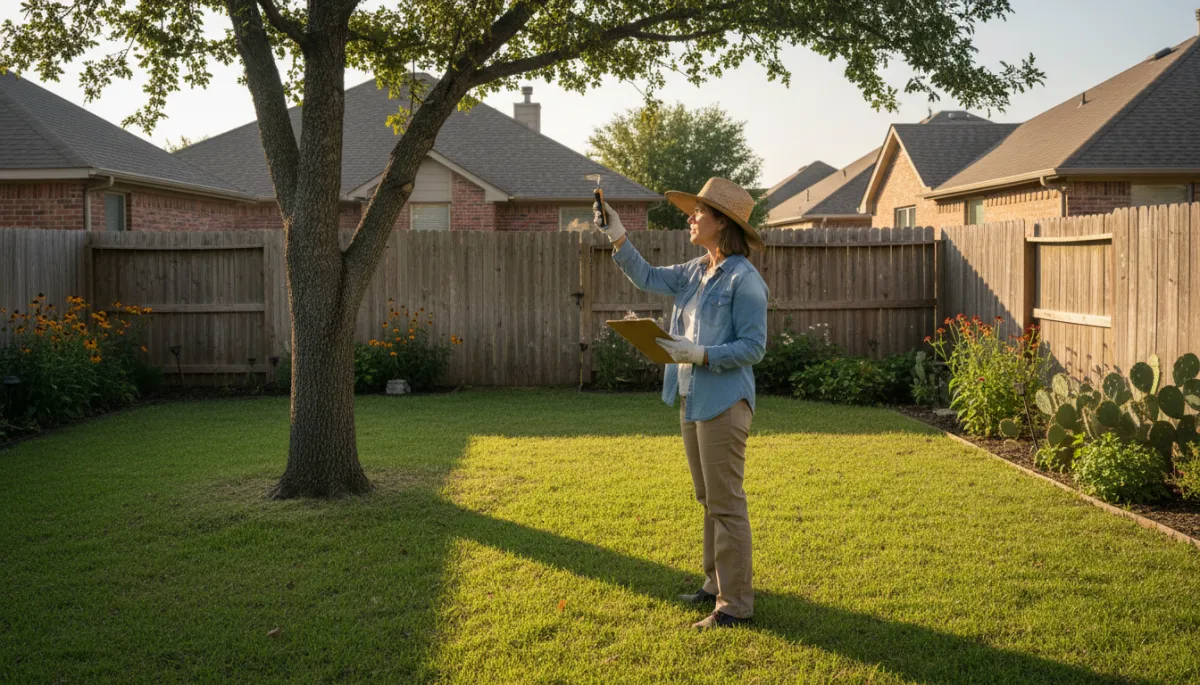
- On a sunny day, walk your yard at 8am, 12pm, and 4pm. Note exactly where the shade lines fall from your house, fence, and trees. Do this once in June and again in September. This gives you a realistic picture of summer and fall light patterns in Collin and Grayson County yards.
- Mark your full-sun zones (6+ hours direct sun, ideally with strong morning light), your part-sun zones (4–6 hours), and your shaded zones (under 4 hours). This map tells you where to put raised bed North Texas if you want reliable harvests.
Full-sun zones are where your tomatoes, peppers, squash, cucumbers, okra, melons, and most fruiting crops belong. Part-sun zones can still be productive with leafy greens, herbs, and root crops, especially in fall and winter when lower light is less limiting and cooler temperatures reduce stress. Don’t waste your best sun on herbs that will happily thrive with less; reserve it for crops that truly demand it if you want the best spot for raised bed garden Texas conditions can offer.
Factor 2 — Proximity to Water
The second question I ask when deciding where to put raised bed North Texas is, “Where is your closest hose bib?” You will water these beds a lot, especially in August. If dragging a hose to your garden feels like a chore, you will skip days. Skipping days in 105°F heat in Prosper or Celina is how beds fail, even when the sun exposure is perfect.
Ideally, your raised bed sits within about 50 feet of a hose bib. That distance allows for a straightforward drip irrigation setup: a timer at the spigot, a main line running to the bed, and drip lines through the soil. Longer runs are possible, but they require larger-diameter supply lines and careful planning to avoid weak water pressure at the emitters. That adds cost and complexity most first‑time gardeners in McKinney or Allen don’t need if they simply choose a closer location from the start.
If your dream spot is across the yard, that’s not a dealbreaker. We can trench a new line, upsize tubing, or add an additional spigot. Just understand that choosing that location changes the budget. When clients ask how to choose raised bed garden location wisely, I tell them: factor water access into the decision as early as you factor sun. In North Texas, you cannot “figure irrigation out later” and expect consistent production.
Factor 3 — Level Ground and Drainage
Raised beds do not erase grading problems. A bed that sits on a noticeable slope will always water unevenly. Water will pool at the low end, drowning roots, and rush off the high end, leaving plants thirsty. I see this constantly in new subdivisions in Collin County where the yard gently slopes toward a back fence or drainage easement and homeowners drop beds right in the low spot because “that’s empty space.”
Under our lawns sits heavy Blackland Prairie clay. Even with a raised system, if you place your bed where the yard already funnels water, that clay turns into a bathtub under your soil mix after heavy rain. Roots sit in cold, saturated conditions and growth stalls. For good raised bed placement North Texas, you want water to flow away from your beds, not into them, when we get one of those surprise spring storms that dump inches in a few hours over Sherman or Denison.
- After a heavy rain, walk the yard. Note where water lingers, where it runs, and where it dries first. Avoid low spots and visible swales. A slight slope (under about 2%) is manageable with minor leveling; anything steeper needs real prep before installation.
- Consider patios and hardscape. Beds on concrete or pavers start level, and drainage is predictable because excess water exits through the bottom and flows off the slab. For many Collin County homeowners, a patio installation is the most reliable answer to “best spot for raised bed garden Texas weather can’t easily ruin.”
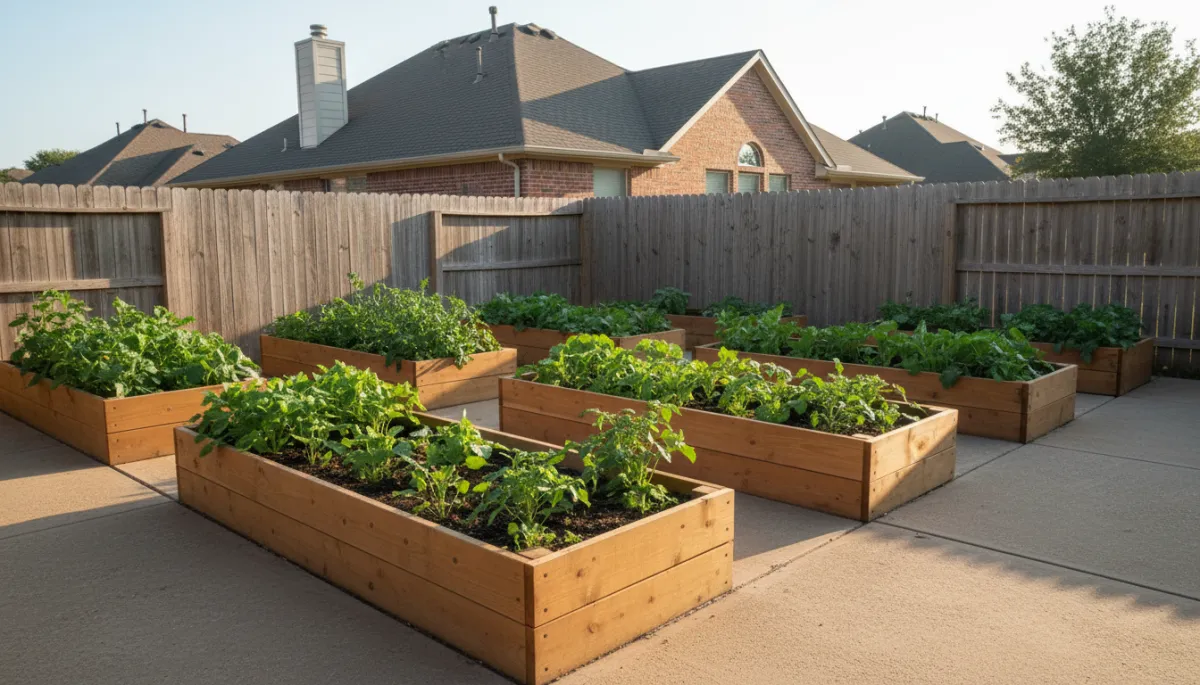
Level, well-drained beds in morning sun produce reliably through brutal North Texas summers.
Factor 4 — Protection from Afternoon Heat in Summer
Most national gardening advice stops at “full sun.” That’s not enough here. In Collin and Grayson Counties, western and southwestern exposures get hammered from roughly 2pm to sunset in July and August. That late-afternoon blast is where plants in Frisco and Celina go from thriving to crispy in two days if irrigation slips even slightly. When I look at where to put raised bed North Texas, I’m not just counting hours of sun; I’m asking which hours you’re getting.
The ideal North Texas configuration for most homeowners is: strong morning sun from the east or southeast, then filtered or structural shade from about 2pm onward in summer. That might mean a bed along the east side of your yard where the house throws afternoon shade, or along a north fence where the sun arcs across but the worst late-day angle is softened. This pattern keeps light high but stress lower, especially for tomatoes, cucumbers, and leafy crops that resent constant scorching.
- If your only option is a western exposure, choose crops accordingly. Okra, peppers, sweet potatoes, and some eggplant tolerate that heat much better than lettuce or cilantro. Plan for heavier mulching and more frequent watering. This is still valid raised bed placement North Texas; it just changes your plant list and maintenance schedule.
- Remember that in fall and winter, this flips. Southern and western exposures become assets. The lower sun angle and cooler temperatures mean the extra warmth extends your season in Sherman or Denison. A bed that was borderline too hot in August becomes your best performer in November.
Factor 5 — Access and Practicality
The best technical location on paper is useless if you never walk out to it. The bed you see from your kitchen window or pass by on the way to let the dog out will get weeded, watered, and harvested. The bed tucked behind the shed in perfect sun but out of sight will turn into a neglected project by July in Allen or Fairview. When I’m asked how to choose raised bed garden location, I always include the phrase, “Will you trip over it in a good way?”
- Keep bed width practical: no more than 4 feet wide if you can access both sides, and 2–3 feet if it’s up against a fence or wall. You should never have to step into the bed to reach the center. That compacts soil and makes routine tasks a hassle.
- Place beds where you naturally walk: near a back patio, just off the porch, along the path to the side gate. Out of sight really does mean out of mind, especially during busy weeks when the garden is not your top priority.
- Check HOA setback rules. Many Collin County communities treat raised beds as structures. That can mean required distances from fences, easements, or utility boxes. The Grower’s Life has worked in most major HOAs in McKinney, Frisco, Prosper, and surrounding cities and can tell you what typically gets approved before you order materials.
- Think about future expansion. If you suspect one bed will turn into three (it usually does), choose an area where you can add a second and third bed in a logical pattern without starting over on irrigation and layout.
When all five factors line up—sun, water, level ground, heat protection, and access—you’ve found the best spot for raised bed garden Texas conditions in your yard. At that point, soil mix, bed size, and plant choice can all be adjusted over time, but your location will keep working year after year.
Get Professional Eyes on Your Yard
Choosing the right location is the first decision Piper makes on every site visit—before soil, before bed size, before plant selection. If you want an experienced Texas Master Gardener to walk your yard and confirm your best options, a one-hour consultation is the fastest way to get it right the first time. Check that The Grower’s Life serves your address at /zip-check, then explore installation options at /raised-bed-gardens. A smart placement decision now means easier gardening and better harvests for years in your North Texas yard.
