North Texas Planting Guide: Seasonal Gardening Tips
Gardening, North Texas Planting Calendar
What to Plant in North Texas by Season — A Four-Season Growing Guide
North Texas is a four-season food garden region, but most Collin and Grayson County gardeners only use about half the year. They plant tomatoes in April, fry everything in July, and give up until next spring. That is a waste of our climate and your raised bed space. With the right timing and varieties, you can be harvesting something from your garden almost every week of the year here in USDA zones 7b–8a.
I’m Piper Klee-Waddle, Texas Master Gardener and owner of The Grower’s Life in McKinney. I install raised bed gardens and coach families and restaurants across Collin and Grayson Counties through the reality of our hot summers, mild winters, heavy clay soils, and roller-coaster temperature swings. This guide walks you through exactly what to plant in North Texas by season, with a practical North Texas planting calendar that matches our actual weather patterns, not a generic national chart. If you want a productive Collin County vegetable garden or you are gardening in Sherman or Denison, use this as your four-season roadmap for what to grow in North Texas, month by month.
What to Plant in Spring — March through May
Spring is when everyone suddenly remembers they own a garden. In North Texas, spring is actually two seasons in one: a short cool window and then a rapid jump into warm weather. In Collin County, our average last frost date runs roughly March 15–25. Grayson County is similar, but I still watch the 10-day forecast instead of the calendar. A late cold snap can and does happen, so we respect it but don’t let it paralyze us.
Cool-Season Crops for March
March is prime time to pack your raised beds with fast-growing cool crops. In our heavy clay soils, I recommend raised beds with loose, compost-rich mix so roots can actually move. Direct sow:
- Lettuce (leaf and romaine types handle our swings better than butterhead)
- Spinach and arugula (they germinate fast in cool soil and bolt as soon as it gets hot, so plant thick and often)
- Beets and carrots (sow shallowly, keep the top half inch of soil consistently moist until you see a green haze of seedlings)
- Swiss chard and kale (these can carry you well into early summer with shade and water)
- Cilantro (does best now and again in fall; it hates our summer heat)
These crops like daytime highs in the 50s–70s. If a late freeze is coming, a simple layer of frost cloth over your raised beds will protect seedlings down into the low 20s and keep you right on schedule.
Warm-Season Crops for April and May
Once we’re past the last frost and overnight lows are reliably above 50°F, it is time for warm-season workhorses. For most Collin County vegetable gardens, that means late March to mid-April for transplants, then seeding through May as soil warms. Focus on:
- Tomatoes — choose heat-tolerant varieties that actually set fruit here: Celebrity (dependable slicer), Sweet 100 (cherry), and Juliet (grape/plum type that shrugs off heat and cracks less)
- Peppers — bells and hot peppers both do well in our long warm season if planted in April with consistent moisture and mulch
- Cucumbers and summer squash — direct sow once soil is warm to the touch; they hate cold feet in our clay-heavy ground
- Bush and pole beans — plant in late April–May for strong germination and fewer rot issues
- Basil — tucks nicely around tomatoes and peppers; wait until nights are consistently warm or it will sulk
One honest warning: planting warm-season crops too early in February is the fastest way to waste money at the nursery. Our soil is still cold, and those plants just sit there, stressed and stunted. You do not “beat the heat” by planting in February; you just give your plants a longer period to suffer. Wait for the soil and nights to warm, then plant strong, actively growing transplants.
What to Plant in Summer — June through August
Let’s be honest: North Texas summer is not gentle. By late June, we are routinely flirting with 100°F+, UV is brutal, and unmulched soil can lose an inch of moisture in a single windy afternoon. This is when a lot of gardens in McKinney, Frisco, and Sherman simply burn out. But if you plant what actually likes heat, and if you have drip irrigation, you can still harvest through the worst of it.
What Thrives in a North Texas Summer
- Okra — the undisputed king of the North Texas summer. Once soil is warm (May–June), plant it and stand back. It loves 100°F and will outgrow half-hearted staking. Harvest often while pods are young and tender.
- Southern peas — black-eyed peas, purple hulls, crowders. These are built for our heat and poor native soils. They fix nitrogen and keep beds productive when lettuce and spinach are a distant memory.
- Sweet potatoes — plant slips in late May through June. They sprawl, shade the soil, and reward you in fall with a heavy harvest even in clay-based beds (raised beds still make digging much easier).
- Heat-loving herbs — basil, rosemary, thyme, and oregano all handle our sun with enough water and mulch. Rosemary especially thrives in our alkaline soils.
What not to plant in a North Texas summer: lettuce, spinach, cilantro, and most other cool-season crops. They will bolt or simply die. If a seed packet says “prefers cool weather,” it is not a June project here.
About tomatoes: once daytime highs are consistently over 95°F, most varieties stop setting new fruit. That does not mean you should rip them out. Keep them watered and mulched, prune lightly to maintain airflow, and let them ride. When temperatures drop back into the 80s in September, they often start flowering and setting again, giving you a strong fall flush without replanting.
What to Plant in Fall — September through November
If you only remember one thing from this guide, let it be this: fall is the best growing season in North Texas. Not spring. Fall. Cooler nights, warm soil, fewer pests, and more stable weather make it the easiest, most productive time for leafy greens and brassicas in Collin and Grayson Counties. This is also where most gardeners completely miss the boat because the timing feels backward.
The Fall Timing Trap: Start in Late July and Early August
You cannot wait until October to “start a fall garden” here. By then, it is too late for big heads of broccoli or a solid cabbage harvest. For a strong fall garden in McKinney, Frisco, Sherman, or Denison, you must start seeds indoors in late July and early August while it is still miserable outside. Use lights or a bright window and keep seedlings inside until they have a few true leaves. Then harden them off and transplant in September as the worst heat breaks.
September Transplants: Brassica Powerhouse
- Broccoli and cauliflower — plant sturdy transplants, not seeds, in early to mid-September for heads before hard freezes
- Cabbage and Brussels sprouts — give them as much time as possible; they like cool, not cold, weather to size up
- Kale and collard greens — tough, forgiving, and will often overwinter with minimal protection in our 7b–8a climate
September–October Direct Sowing
With soil still warm and nights cooling down, seeds jump out of the ground and grow fast. Direct sow:
- Lettuce, spinach, and arugula — sow every 2–3 weeks for a steady salad supply into winter
- Beets and carrots — they germinate better now than in spring because you are not fighting soil crusting and wild temperature swings as much
- Radishes — the fastest payoff in the garden. In our fall weather, many varieties are harvestable in 25–30 days. Great for kids and new gardeners.
- Turnips — both roots and greens are usable; they do very well in raised beds over clay.
October Additions and the Fall Shoulder Season
October is when many local gardeners are shutting things down. At The Grower’s Life, this is when we lean in. This “shoulder season” is our secret weapon for four-season production that most competitors simply ignore. In October, layer in:
- Cilantro — fall-planted cilantro is slower to bolt and tastes better than spring plantings here
- Swiss chard — colorful, productive, and tolerant of light frosts; great for winter soups and sautés
- Pak choi and other Asian greens — quick to mature and very happy in our fall conditions
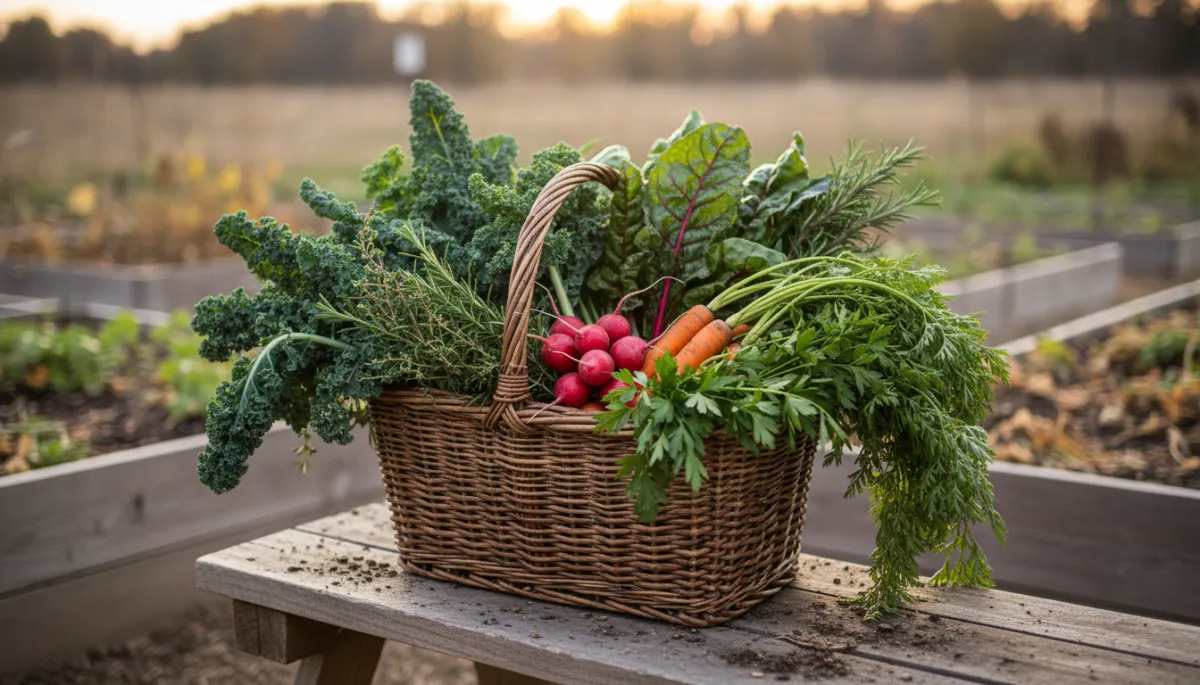
Fall in North Texas is prime time for abundant greens and roots from raised beds.
What to Plant in Winter — December through February
Winter in North Texas is mild compared to much of the country. We get some hard freezes, but they are usually short-lived. With the right crops and a bit of protection, your garden does not have to go dormant. In Collin and Grayson Counties, winter is for holding and extending your fall crops, plus quietly setting up spring behind the scenes.
Cold-Hardy Crops That Overwinter
- Kale and collard greens — both get sweeter after a frost. The cold converts starches to sugars, so do not be afraid of a light freeze; it improves flavor.
- Spinach and Swiss chard — with a layer of mulch and occasional row cover on very cold nights, they often produce all winter and explode with growth in early spring.
- Brussels sprouts — slow but tough. Planting in fall and letting them ride through winter gives you compact, flavorful sprouts as we warm up.
- Garlic — plant cloves in November for a June harvest. In our heavy clay areas, raised beds make it much easier to dig and cure good-sized bulbs.
A simple row cover or frost cloth stretched over hoops can easily extend harvests through most North Texas winters. It protects against wind, light freezes, and the occasional ice event, while still letting in light and rain. You do not need a greenhouse to practice four-season gardening here — just a bit of fabric and good timing.
February: Quiet Month, Critical Prep
February is when you start looking ahead to spring while still harvesting winter greens. Indoors, start tomato and pepper seeds about 6–8 weeks before your expected last frost (remember, March 15–25 is a good baseline for Collin County). That means late January through mid-February is your seed-starting window if you want strong, stocky plants ready to go into your raised beds in late March or early April. Outside, you can also direct sow hardy greens like spinach and kale as soon as overnight lows regularly stay above 25°F.
Monthly North Texas Planting Calendar
Here is a simple month-by-month North Texas planting calendar tailored to Collin and Grayson County raised bed gardens. Use it as a checklist to keep your four-season gardening on track.
| Month | What to Do |
|---|---|
| January | Start nothing outdoors. Harvest cold-hardy greens like kale, collards, and spinach. Plan your spring seed order and review bed layout for your Collin County vegetable garden. |
| February | Start tomato and pepper seeds indoors under lights. Direct sow spinach and kale once overnight lows stay above 25°F. Top off raised beds with compost in late month if soil is workable. |
| March | Direct sow cool-season crops: lettuce, beets, carrots, arugula, spinach. After last frost (late March), begin transplanting hardy crops and hardening off indoor seedlings. |
| April | Transplant tomatoes, peppers, and eggplant. Direct sow cucumbers, beans, and squash once soil is warm. Plant basil around the edges of beds for heat-loving flavor. |
| May | Plant okra after soil is thoroughly warm. Pull bolting cool-season crops to free space. Mulch beds heavily (2–3 inches) to prepare for summer heat and conserve moisture. |
| June | Plant sweet potato slips early in the month. Focus on irrigation setup and consistency. Harvest spring crops like onions, remaining greens, and early tomatoes. |
| July | Minimal planting. Keep okra and southern peas producing with water and picking. Maintain irrigation and mulch; shade cloth can help protect stressed crops. |
| August | Start fall transplants (broccoli, kale, cauliflower, cabbage) indoors under lights. Plant sweet potato slips if you have not already — this is last call. Keep beds watered and weeds down. |
| September | Transplant fall brassicas into raised beds. Direct sow lettuce, spinach, carrots, beets, radishes, and arugula. Refresh mulch and adjust drip lines if needed. |
| October | Continue direct sowing greens as temperatures cool further. This is often the best harvesting month of the year. Add cilantro and other cool-loving herbs to open spots. |
| November | Plant garlic for next summer’s harvest. Protect frost-sensitive plants with row cover on cold nights. Harvest aggressively before the first hard freeze. |
| December | Harvest cold-hardy greens regularly. Add row cover for protection during freezes. Review what worked this year and adjust next year’s planting plan for your specific North Texas microclimate. |
Ready to Garden All Year in North Texas?
North Texas absolutely supports four-season gardening if you match your crops and timing to our real conditions — heavy clay soils, hot summers, mild winters, and that mid-March last frost window. Now you know what to plant in North Texas by season and how to use a practical North Texas planting calendar to keep your beds producing, not sitting empty. A well-planned Collin County vegetable garden or a compact Grayson County backyard plot can give you fresh food nearly every month of the year.
If you want help tailoring this plan to your yard, start with a quick ZIP-check so we can confirm your timing. If you are starting from scratch or ready to upgrade from pots in the driveway, explore our turnkey raised bed gardens. Limited on space but still want in on four-season growing? Check out the Urban Patio Box for balconies and small patios.
— Piper Klee-Waddle, Texas Master Gardener and owner of The Grower’s Life, serving McKinney, Frisco, Allen, Prosper, Celina, Princeton, Fairview, Sherman, and Denison in Collin and Grayson County, Texas.
