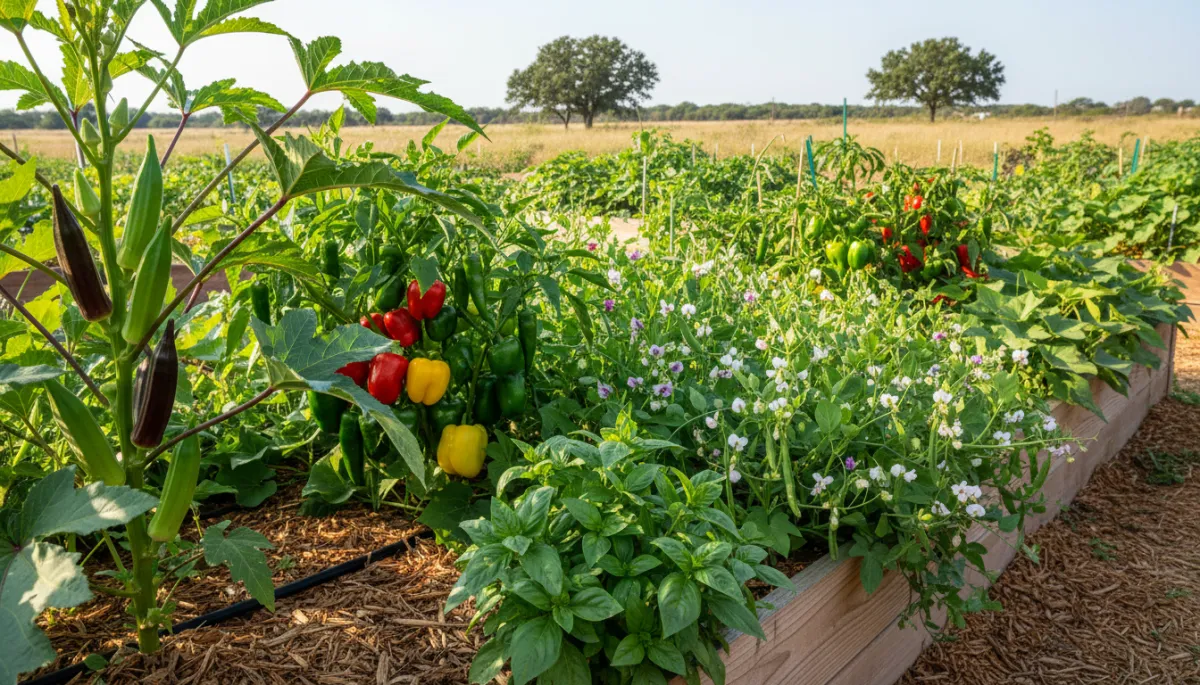
Top 5 Vegetables for North Texas Summer Heat
North Texas Gardening, Summer Vegetables, Heat Tolerant Crops
5 Vegetables That Actually Thrive in North Texas Summer Heat
Most of what you planted in spring is done by June. Tomatoes are in survival mode. Lettuce bolted weeks ago. A North Texas summer — sustained heat above 100°F, blazing afternoon sun, minimal rainfall — eliminates most of the vegetable garden playbook. But not all of it. A handful of crops were designed for exactly these conditions. They do not just survive a Collin County July — they thrive in it. Below are five vegetables that actually produce in North Texas summer heat, and exactly what they need to keep your raised beds working when everything else taps out.
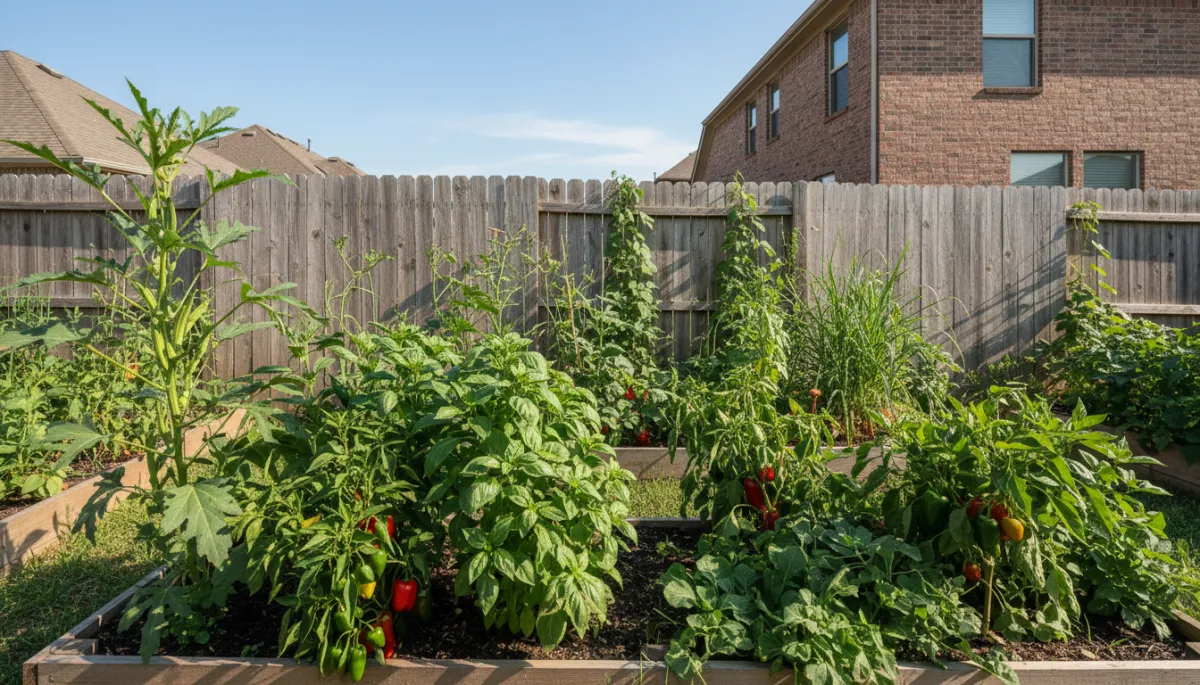
#1 — Okra
If you ask me for one vegetable that genuinely loves our summers, it is okra. Okra is a subtropical crop that was practically designed for North Texas summers. It loves extreme heat, tolerates drought, and produces prolifically from June through the first frost. I have watched okra in McKinney and Frisco look sleepy in May, then explode with growth once we start stacking 100°F days. The hotter it gets, the better okra performs — this is the rare crop that accelerates in July and August instead of shutting down like tomatoes and cucumbers do here.
To grow okra in a raised bed, direct sow after the last frost (late April through May) into a full-sun bed with drip irrigation. Okra reaches 4–6 feet tall, so plan for height and do not crowd it. Space plants 18–24 inches apart in rows, or as individual “pillars” in the back of a mixed bed. Once plants start producing, harvest pods when they are 3–4 inches long — every 2–3 days in peak summer. If you let pods get big and woody, the plant gets the message that its job is done and slows down production. In a well-built raised bed with compost-rich soil, a single okra plant can easily give you 50+ pods per season, sometimes far more in long, hot years like we see in Collin and Grayson Counties.
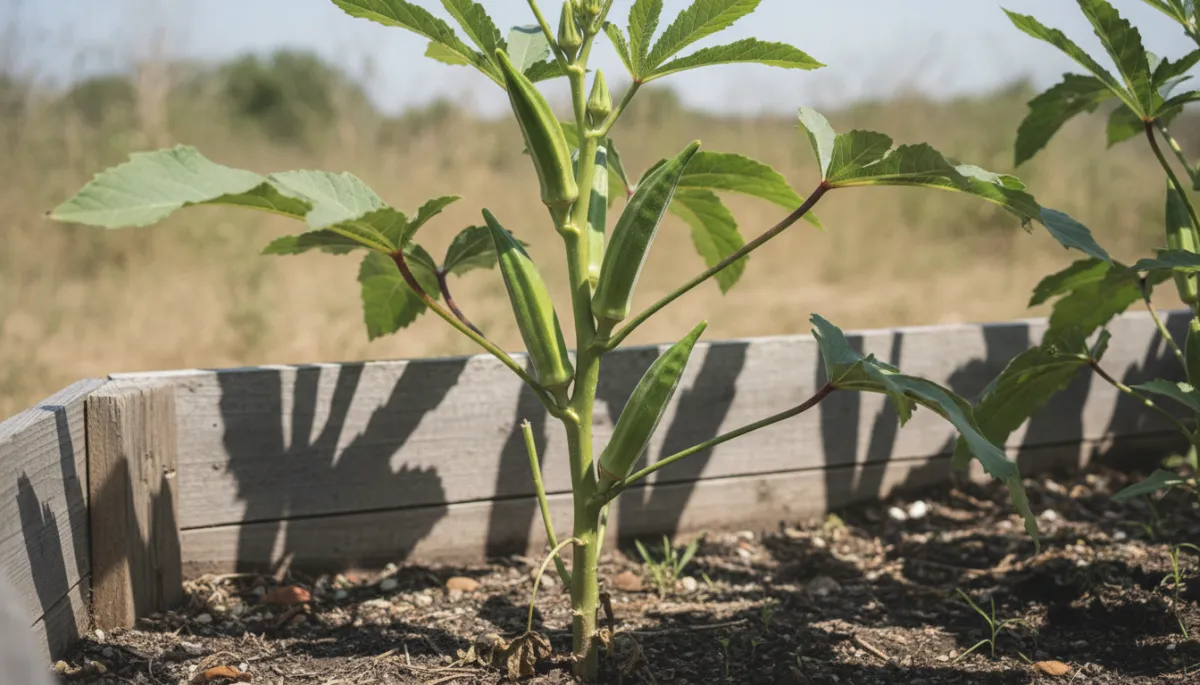
Healthy okra in a deep raised bed can pump out pods every other day all summer.
For our specific climate, heat-tolerant varieties like Clemson Spineless and Burgundy perform best. I have grown both in Prosper, Allen, and Sherman with equally strong results. Their deep roots love the loose, well-drained environment of a raised bed, especially when paired with consistent drip irrigation. If you are wondering what to grow in North Texas summer that will not quit on you, okra should be at the top of your list.
#2 — Southern Peas (Black-Eyed Peas, Purple Hull, Crowder Peas)
Southern peas are one of the most dependable heat tolerant vegetables Texas gardeners can plant. They are a traditional Southern crop for good reason — they were bred for hot, humid, punishing conditions. In Collin County and Grayson County, they shrug off 100°F afternoons, keep blooming, and keep setting pods when more fragile vegetables have long checked out. As a bonus, they fix nitrogen in the soil as they grow, which improves your raised bed for fall crops like broccoli, greens, and carrots.
Direct sow southern peas from May through July. Bush varieties stay more compact and work beautifully in raised beds; pole varieties need a trellis or cattle panel. In my clients’ gardens in Frisco and Celina, a single 4×8 raised bed planted with bush purple hull peas has carried families through the dead of summer with steady harvests. Harvest when pods are plump but still green and flexible, before they dry down on the vine. Fresh-shelled peas have a creamy texture and rich flavor that is miles better than the dried version — one of the most underrated summer vegetables Collin County gardeners can grow at home.
For our area, purple hull peas and crowder peas handle the heat especially well. I like to use them as a “bridge crop” between spring and fall — they fill the bed from June through September while quietly improving the soil. When you pull them out in late summer or early fall, you are planting into a bed that is already primed for your next round of crops. If you want vegetables that thrive in North Texas summer heat and make your fall garden better, southern peas are a smart move.
#3 — Sweet Potatoes
Sweet potatoes are the definition of “set it and let summer do the work.” They need a long, hot growing season — exactly what North Texas delivers every single year. You plant slips in late May or June, and they quietly spend four-plus months underground bulking up in the heat. Above ground, the vines sprawl and create a dense green canopy that shades the soil, suppresses weeds, and looks beautiful in a raised bed or along the edge of a garden.
To grow sweet potatoes, plant slips — rooted cuttings, not seeds — in late May through early June once the soil is truly warm. In North Texas, cold soil is more of a threat than heat for this crop. Give each slip plenty of room; vines easily spread 4–6 feet. In a raised bed, I like to plant them along one side and let them spill over the edge. Mulch heavily to retain moisture and keep the soil temperature more even. After that, they are mostly hands-off. Do not dig early; wait until after the first light frost or when vines start to yellow, typically mid-October to early November in Collin County. Curing the harvested roots in a warm, dry spot for 1–2 weeks dramatically improves sweetness and storage life.
Beauregard and Covington are reliable, productive varieties for our clay-heavy but warm soils. In raised beds, the loose, well-drained mix lets the tubers grow long and uniform instead of twisted and stunted. If you are planning what to grow in North Texas summer that will pay you back in a big fall harvest, sweet potatoes are hard to beat.
#4 — Peppers
Peppers are the workhorses of the North Texas summer garden. They are heat-lovers that produce steadily from early summer into fall. Unlike tomatoes, which usually stop setting fruit once daytime highs stay above 95°F, peppers keep growing and setting new fruit through sustained heat. They may slow down at the absolute peak of July and August, but if you keep the plants healthy, they roar back in September and often produce right up to first frost in Grayson and Collin Counties.
Start with transplants after the last frost, typically in April for our area. Getting peppers established before the serious heat hits makes a big difference. Both sweet peppers (bell, banana, shishito) and hot peppers (jalapeño, serrano, cayenne) perform well in raised beds. The non‑negotiable piece is water: peppers need consistent moisture. Drip irrigation on a timer is essential if you want reliable production in a North Texas summer. Mulch around the base of each plant to keep roots cool and reduce evaporation. When we hit those 105°F weeks, you may see flowers drop and production pause, but do not pull the plants. Leave them in, keep them watered, and they will reward you with a huge flush of peppers once temperatures ease a bit.
In my clients’ gardens from Allen to Denison, jalapeños and cayenne peppers are the most consistently productive through high heat. Shishito peppers have become a favorite because they are incredibly prolific and great for quick weeknight cooking. In a healthy raised bed, a single pepper plant can easily produce 50–100+ peppers in a season. If you are looking for summer vegetables Collin County gardeners can count on for big, colorful harvests, peppers belong in every bed.
#5 — Basil
Basil is the unsung hero of the North Texas summer garden. While cooler herbs like cilantro and dill disappear as soon as the heat arrives, basil leans into it. It is a full-sun, heat-loving herb that grows aggressively from May through September in our climate. If you want one herb that will absolutely earn its space in your raised bed all summer, this is it — especially if you love fresh pesto, caprese salads, or Thai-inspired dishes.
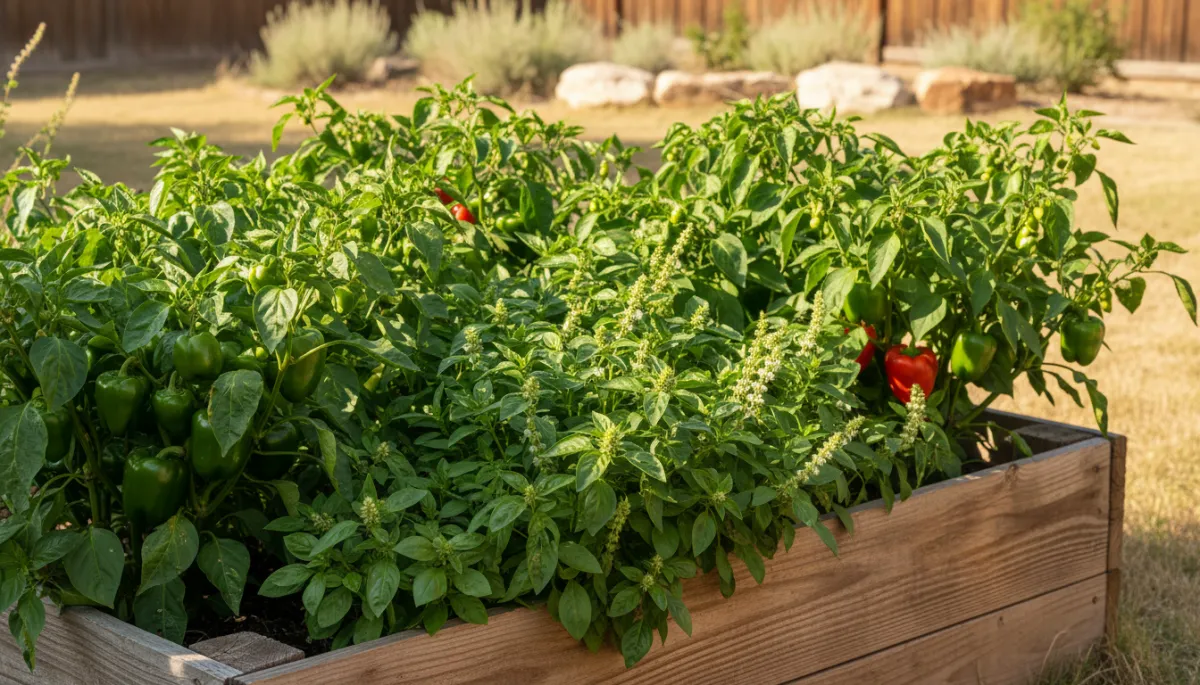
Peppers and basil thrive side by side, keeping raised beds productive through peak heat.
You can transplant basil after the last frost or direct sow seeds once the soil warms. Give it full sun and, like peppers, steady moisture. Basil will wilt dramatically in the afternoon heat if it dries out, but it rebounds quickly when watered. The key to getting months of production is ruthless flower management: pinch off flower heads as soon as they appear. A basil plant allowed to flower and set seed will shift energy away from leaf production and decline quickly. With regular harvesting and consistent flower pinching, a single basil plant can produce armfuls of fragrant leaves for four months straight in North Texas.
Genovese basil is the classic Italian variety and a reliable performer in Collin County beds. Thai basil handles heat especially well and brings a spicy, anise flavor that is worth growing in its own patch. In a raised bed with drip irrigation, basil is essentially low-maintenance from May through September. If you are making a list of vegetables that thrive in North Texas summer heat, do not forget this powerhouse herb — it is the most productive summer herb I see in client gardens across McKinney, Fairview, and beyond.
Bringing It All Together in Your North Texas Summer Garden
These five crops — okra, southern peas, sweet potatoes, peppers, and basil — form the backbone of a productive North Texas summer garden. They are not theoretical recommendations; they are the heat tolerant vegetables Texas gardeners in Collin and Grayson Counties can rely on year after year. A well-built raised bed with drip irrigation gives each of them the loose soil, consistent moisture, and drainage they need to perform at their best through our brutal summers. If you are ready to keep your garden working when the thermometer spikes, start here.
To see how we design and install raised beds built for North Texas conditions, explore our raised bed gardens page. For full seasonal timing — including when to plant each of these crops in McKinney, Frisco, Allen, Prosper, Celina, Princeton, Fairview, Sherman, and Denison — use The Grower’s Life North Texas Planting Calendar as your guide.
