

Fresh Basil Pesto
Ten minutes, one food processor, and a fistful of basil. Here's the pesto we made together — so you can make it again at home.
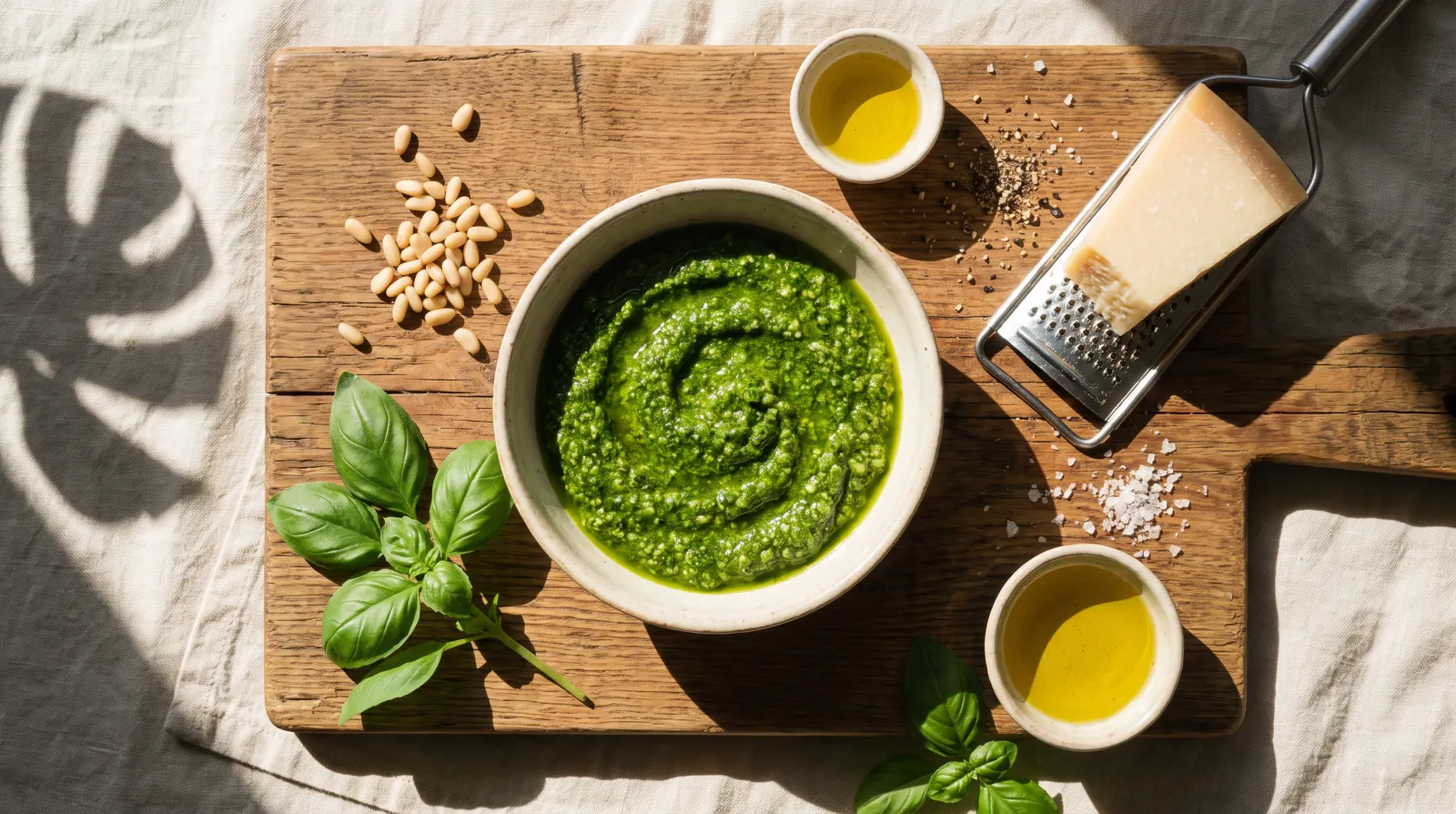
Pesto has a reputation it doesn't deserve. Most people treat it like something that only comes in a jar, but real basil pesto is one of the fastest, most forgiving things you'll ever make — a handful of green, a little salt, some good oil, and you're done. Make a batch and it'll happily live in your fridge all week, ready to wake up a bowl of pasta, a sandwich, a plate of roasted veggies, or (we won't tell) a spoon.
If you just made this with us — welcome back. Here's everything you need to do it again on your own kitchen counter.
What you'll need
- 2 cups packed basil leaves
- 1–2 cloves garlic, chopped
- 1/3 cup pine nuts
- Juice of 1/2 lemon
- 1/2 cup extra-virgin olive oil
- 1/2 cup grated Parmesan
- Kosher salt
- Black pepper
Makes about 1 cup — roughly 16 generous spoonfuls.
How to make it
- Give the basil a quick dip. Bring a small pot of water to a boil and set a bowl of ice water right next to it. Drop the basil leaves into the boiling water for just 5 to 10 seconds — barely a blink — then scoop them straight into the ice bath. This little trick is the whole secret to that gorgeous, stays-bright green instead of a sad olive drab. Fish the leaves out and pat them really dry; a paper towel and a firm squeeze does it.
- Load up the processor. Basil, garlic, pine nuts, and that squeeze of lemon all go into the food processor together. Pulse a few times until everything breaks down into happy little green flecks.
- Bring on the oil. With the machine running low and slow, drizzle the olive oil in a steady stream. Go easy here — you want it lush and a little textured, not whipped into baby food. Stop while it still has some character to it.
- Finish by hand. Scrape it into a bowl and stir in the Parmesan. Taste, then season with salt and pepper until it makes you close your eyes for a second. Too thick? A little more oil loosens it right up.
And that's it. You made pesto.
Keeping it around
Spoon it into a jar, float a thin layer of olive oil on top to keep it bright, and it'll hold in the fridge for up to two weeks. Want it to last longer? Freeze it — a jar with an oil cap keeps for months, or freeze spoonfuls in an ice-cube tray and pop out a cube whenever dinner needs rescuing.
One more thing
This is the first of a lot of recipes we've got coming — herbs, vegetables, and all the good stuff you can actually grow and cook yourself. Bookmark the journal and come back hungry. 🌿